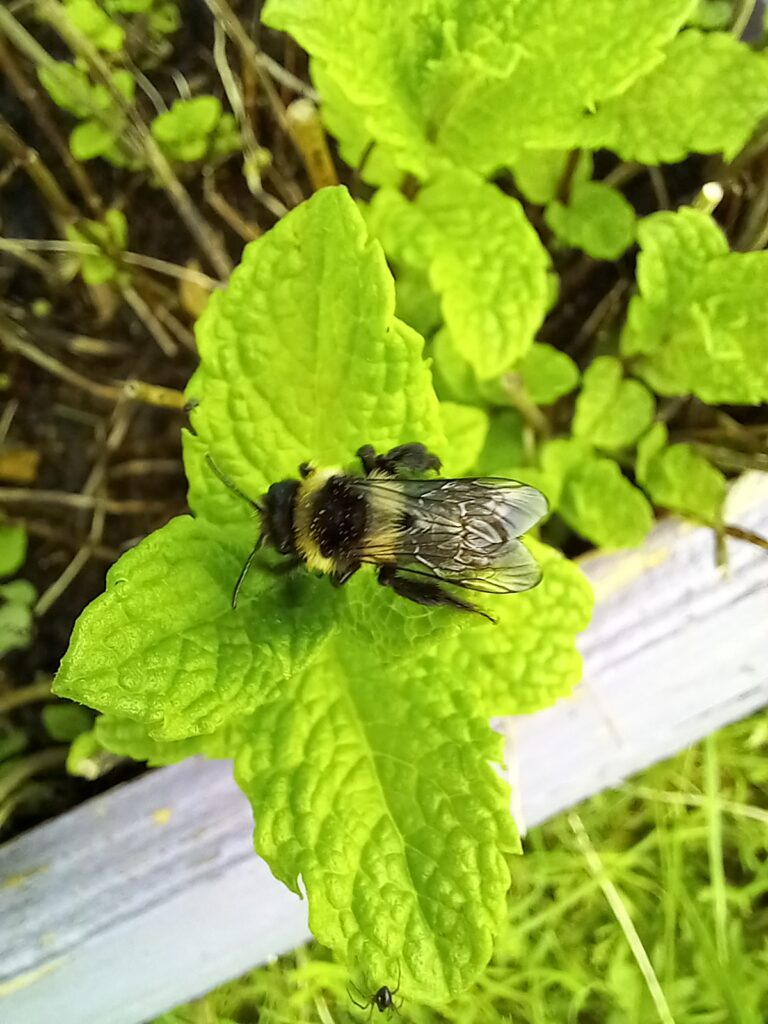
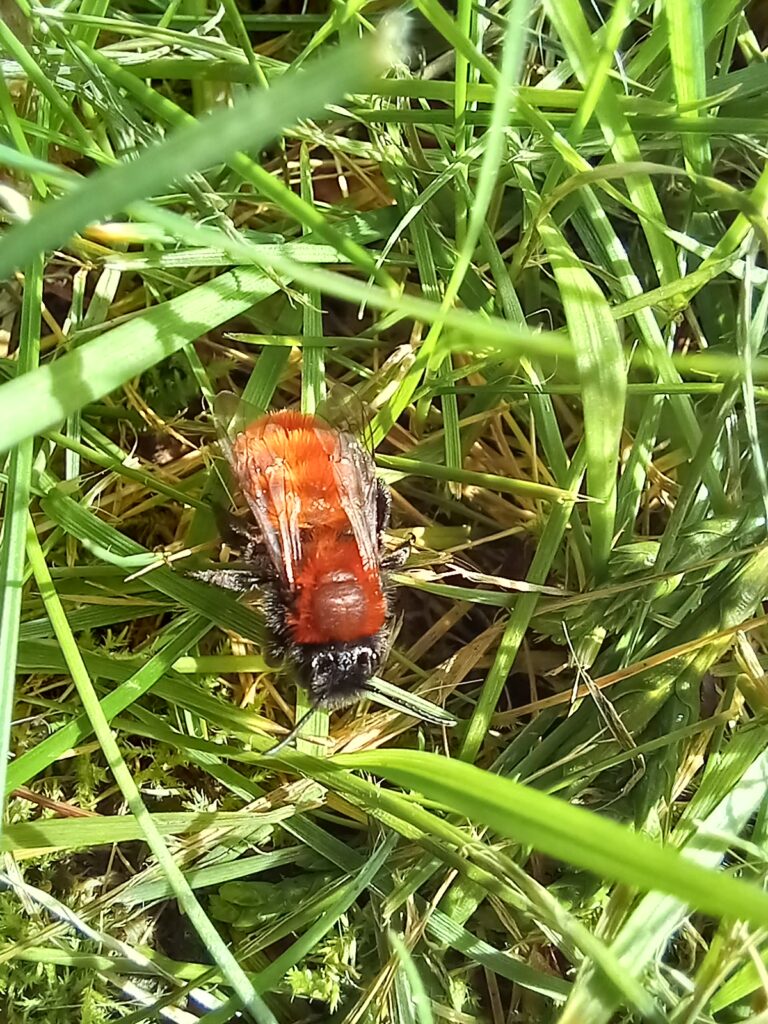
The photos show:
- Nomad bee species which looks like a wasp.
- Ashy mining bee (Andrena cineraria) grey and black
- Tawny mining bee (Andrena fulva) orange

This months meeting was all about bees- bumblebees and solitary bees. We looked at their evolution from predatory wasps to the diverse pollinators we know today. With 24 bumblebee species and over 250 solitary bees there are a lot of bees to find. Spring is a good time to get your eye in finding bees as now they are starting to emerge from hibernation as in queen bumbles or from dormancy as in solitary bees.
We looked at bumblebee and solitary bee ecology including lifecycle, nesting and breeding and differences between males and females. Solitary bees can nest in cavities such as those in bee hotels or there are mining bees which dig a tunnel into the ground or suitable sunny slope. There are cuckoo bumblebees which infiltrate a bumblebee nest and take it over and predatory bees or other insects which parasitise solitary bees. It can be a dangerous world for our bees and this can be found in your garden if you look carefully.
The weather was rather unkind after several sunny days so not many bees were about but we did see a few bumblebees – Queens of Common Carder, Buff-tailed and Red-tailed. Also evident were the volcano shaped mounds of earth created by Tawny Mining bees which have suddenly started to appear, once we found one we quickly spotted others. I think the bees themselves were keeping warm and out of the wind in their tunnels.
By co-incidence on BBC 4 the next day was a programme called “My Garden of a Thousand Bees” which complements the talk very well and I thoroughly recommend watching, it was fascinating and so good to see the insects filmed so close.
Look out for the 8 common bumblebees : Buff-tailed, White-tailed, Garden, Heath, Early, Red-tailed, Tree and Common Carder most of these use gardens for both forage and nesting so keep an eye out. The males and cuckoo bumblebees arrive later in the year and can look different so have a check at your ID charts.