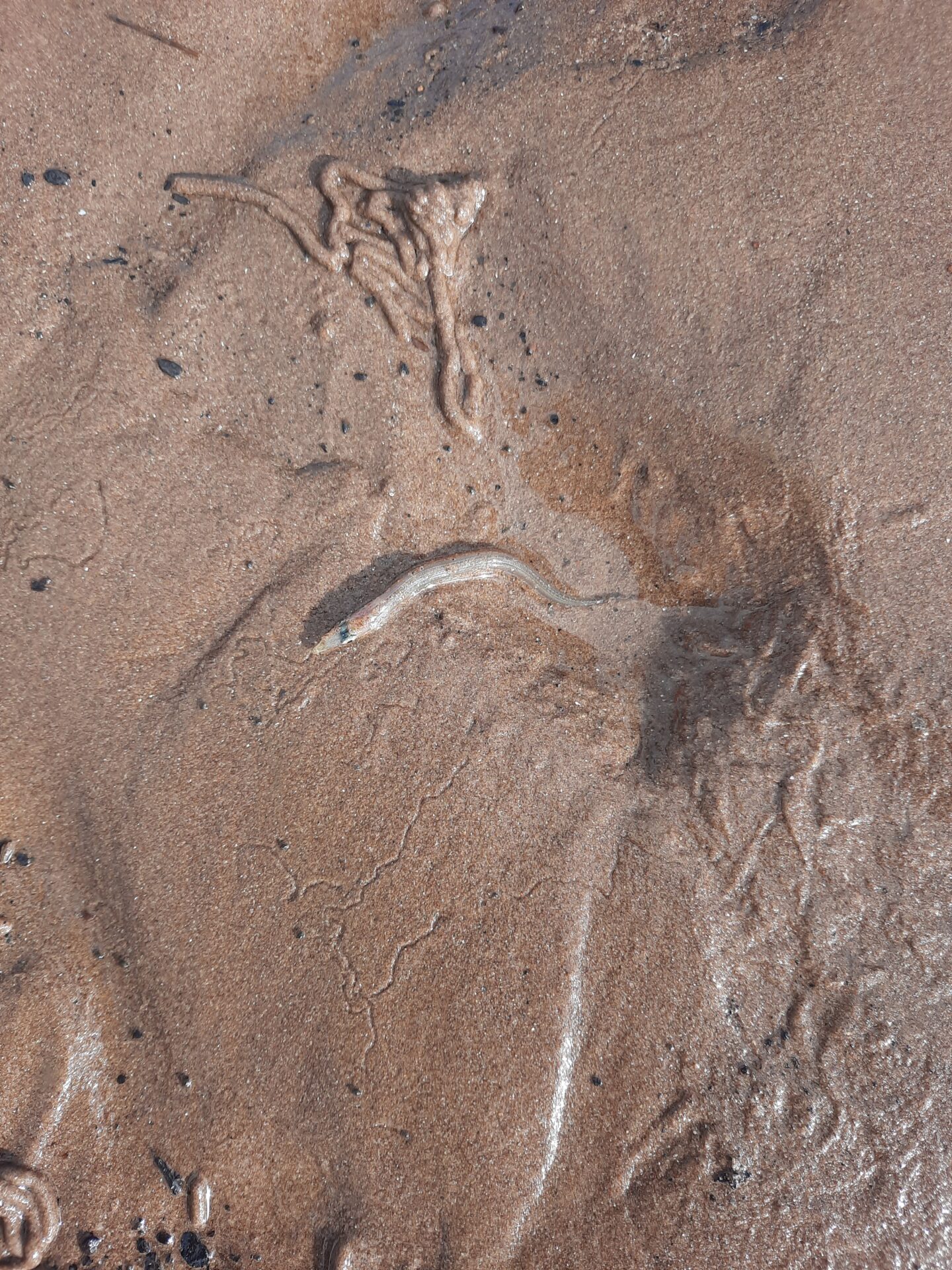
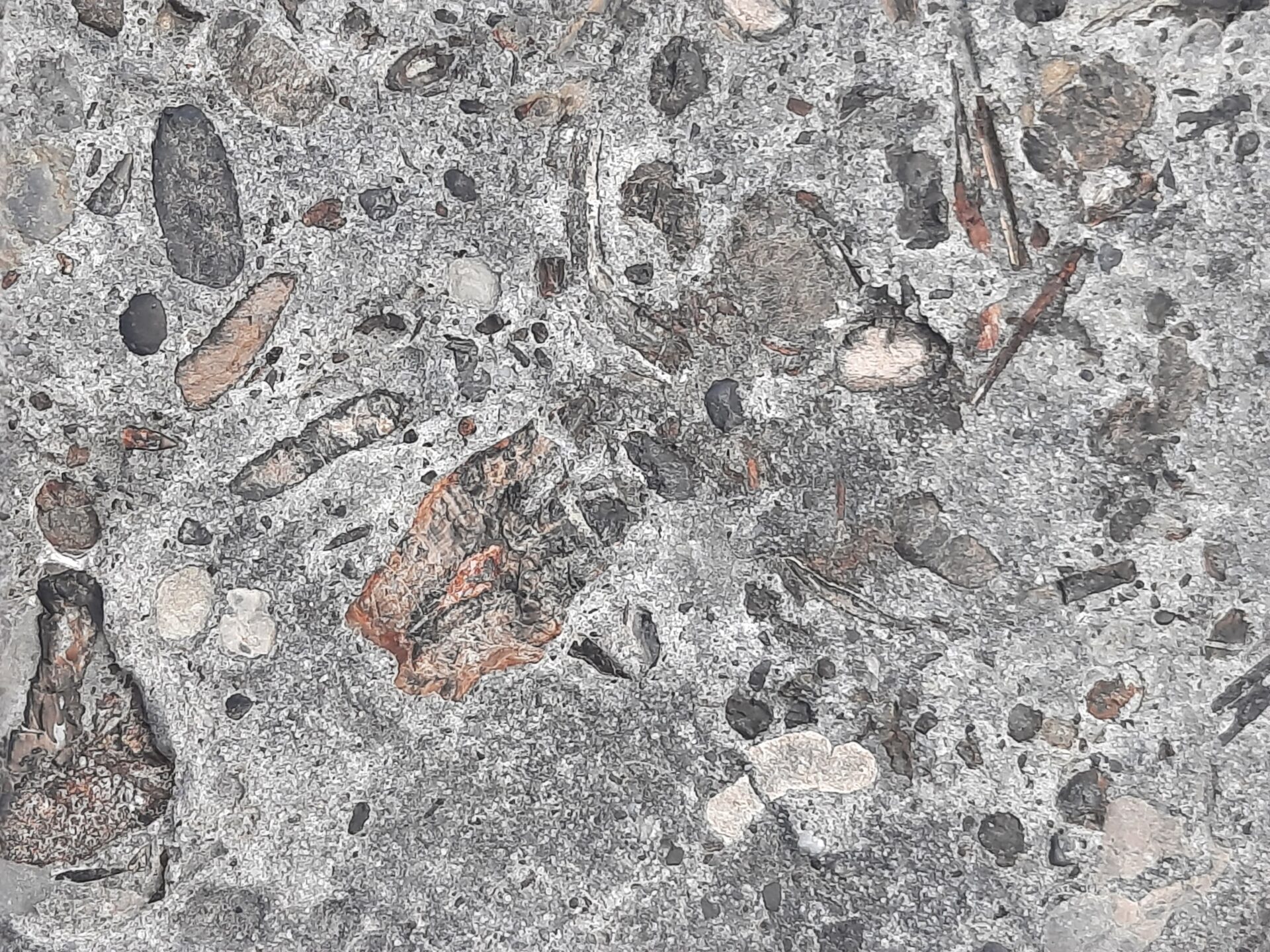
It was a beautiful sunny and warm morning at Blue Anchor, perfect for fossil hunting and searching for beach wildlife. We had intended to go straight to the fossil areas but were side tracked by a sandy pool alive with fish. Annabel had the foresight to bring a net and managed to carefully catch one of the fish which was identified as a Sand Goby and a shore crab. Walking over to the Jurassic cliffs we came across a Sand Eel, almost like glass and a Sand Snail (possibly Leaden Sand Snail- Conuber sordidum) which had travelled through the sand leaving a distinctive trail behind it- apparently on its way to lunch off other molluscs. A banded wedge shell was also found amongst the hundreds of blow lugworm holes.
Closer to the cliffs we had a look at the geology and could clearly see the distinction between the earlier red Triassic rock, formed in dry desert conditions and the later grey, dark grey and green Jurassic rocks (the “Blue Anchor Formation”) which are full of marine fossils formed during an environment with brackish lakes. Here are what is called the “Westbury Beds” which are full of fossils. Three gypsum horizons (lines) are visible in the cliffs - gypsum forms “orange alabaster” seen in a huge deposit which had come down in a rock fall. These gypsum horizons match up with those at St. Audries Bay,
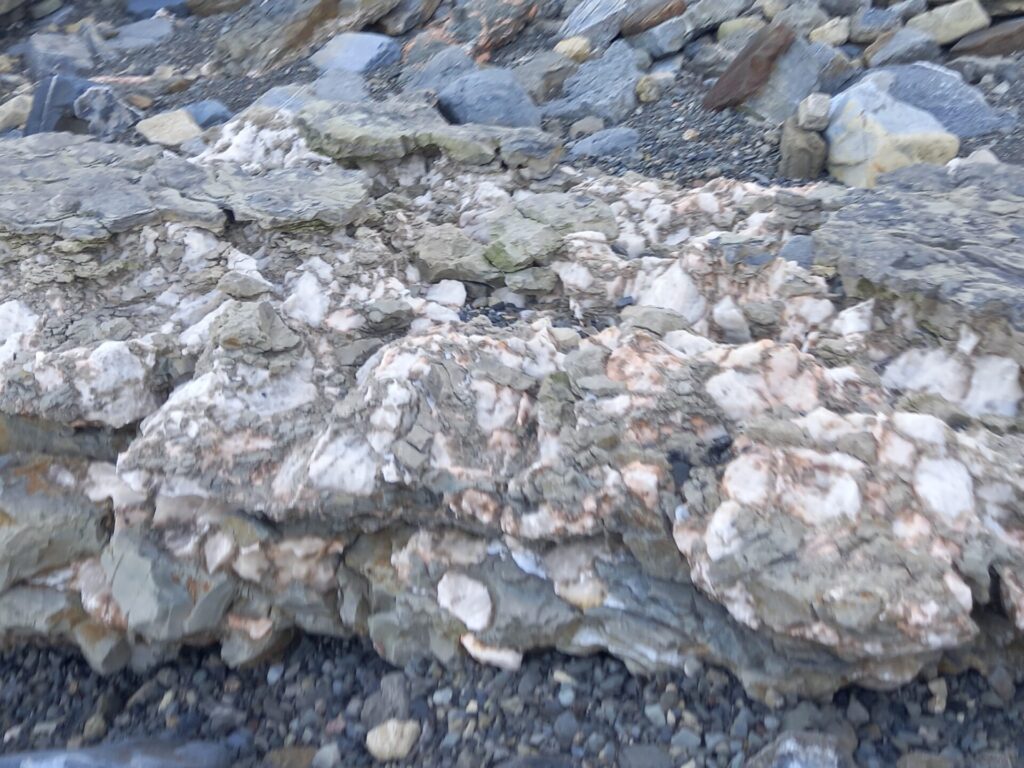
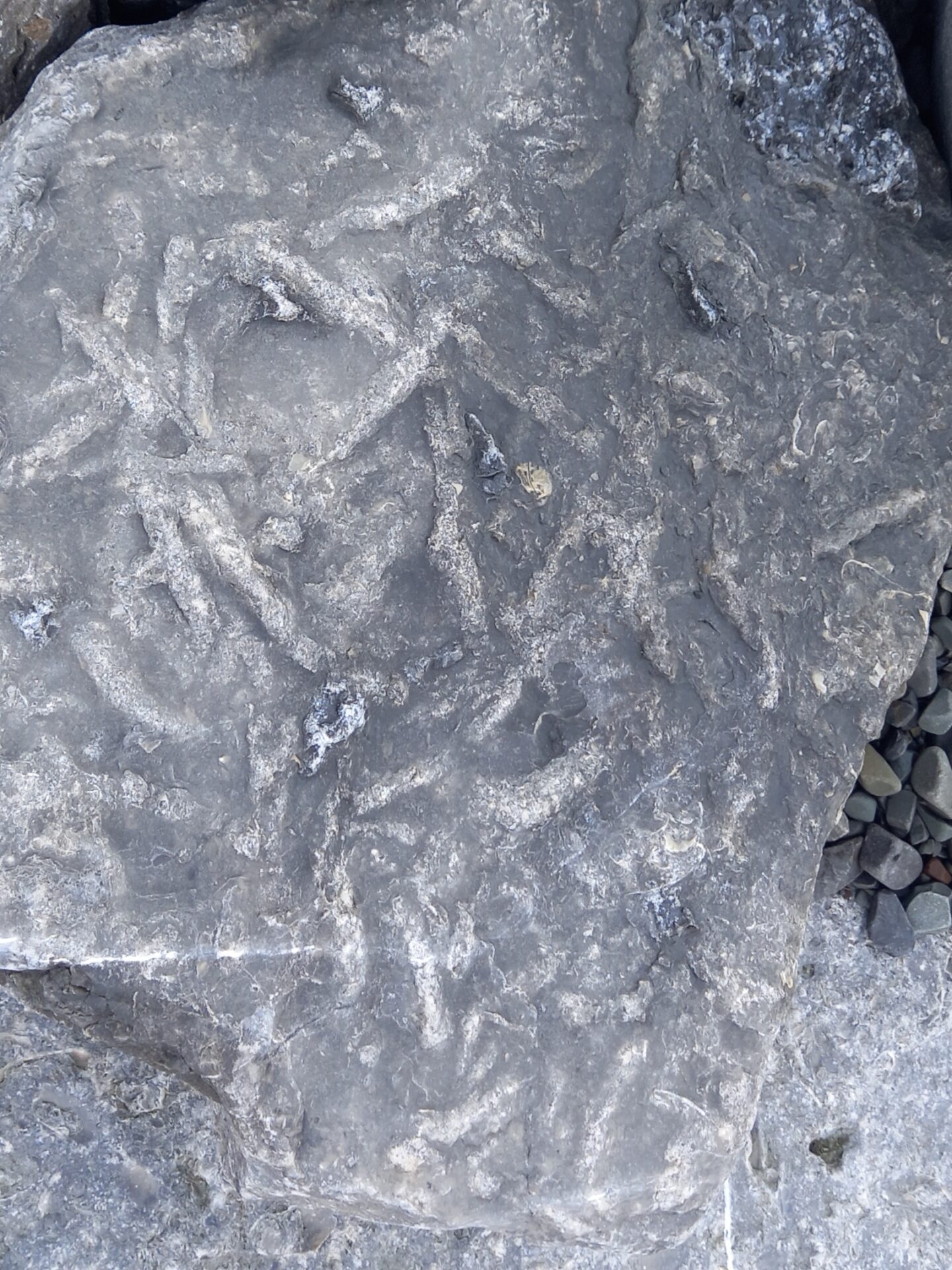
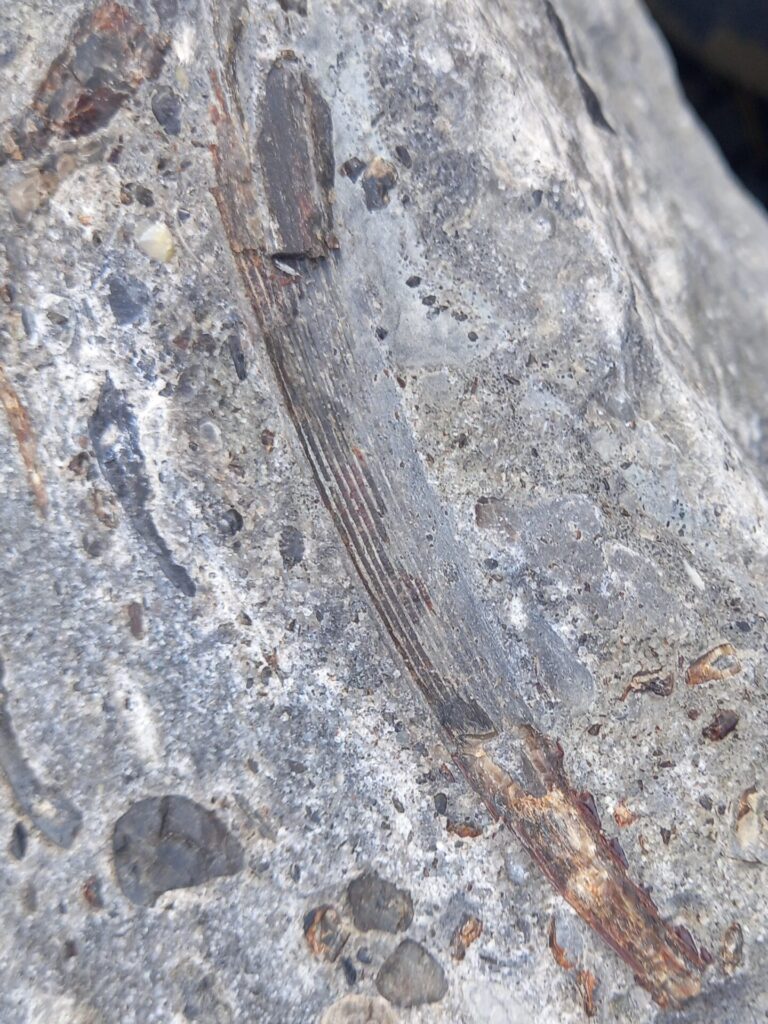
As we explored we found rocks covered in fossils of molluscs which were very similar to modern day mussels and cockles. There was also a bed of fossilised coral and bone beds with dozens of fragments of bones and a perfectly preserved fish fin. Sarah found an ammonite in the rocks further along the beach in the rock pool area.
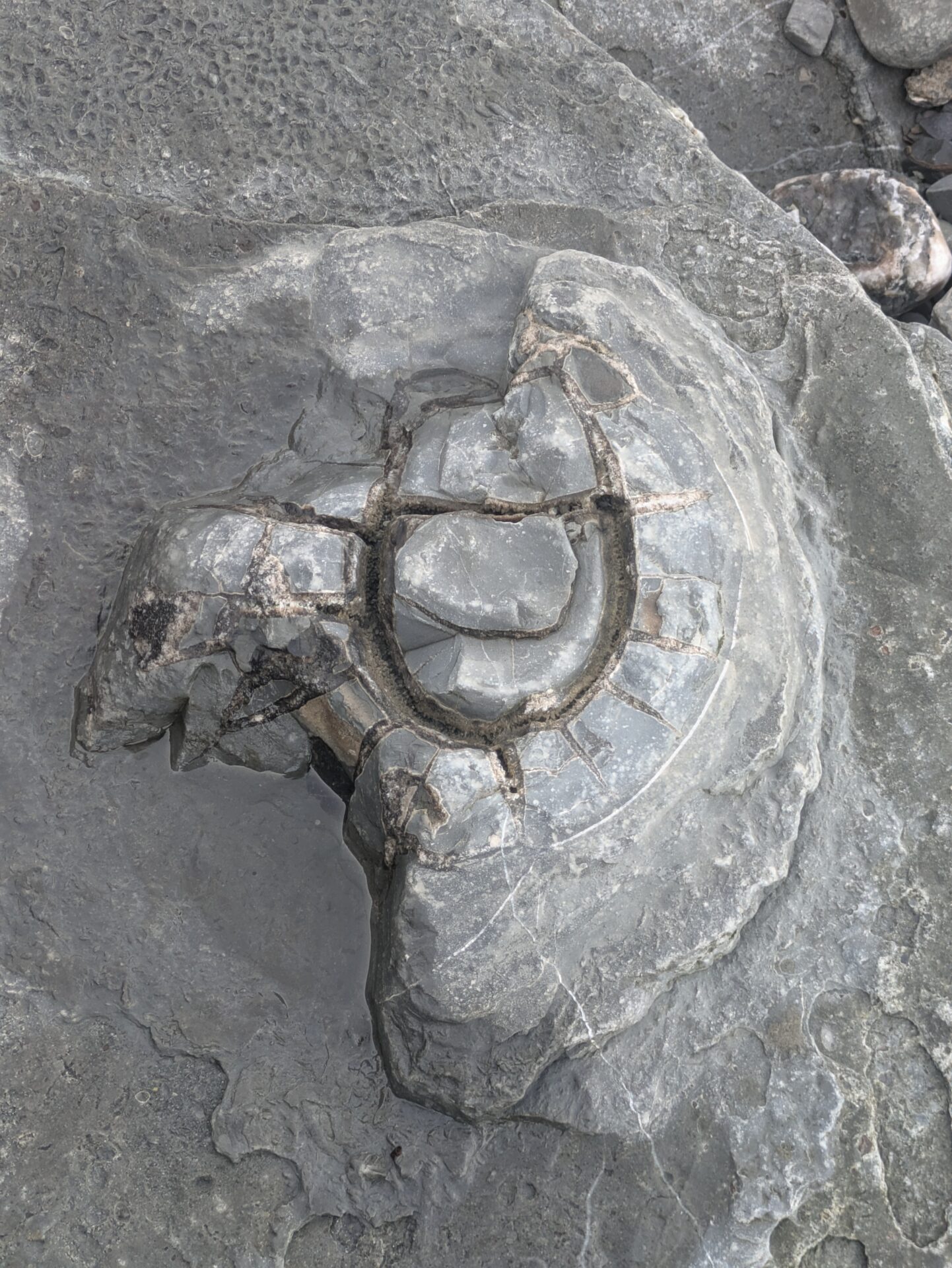
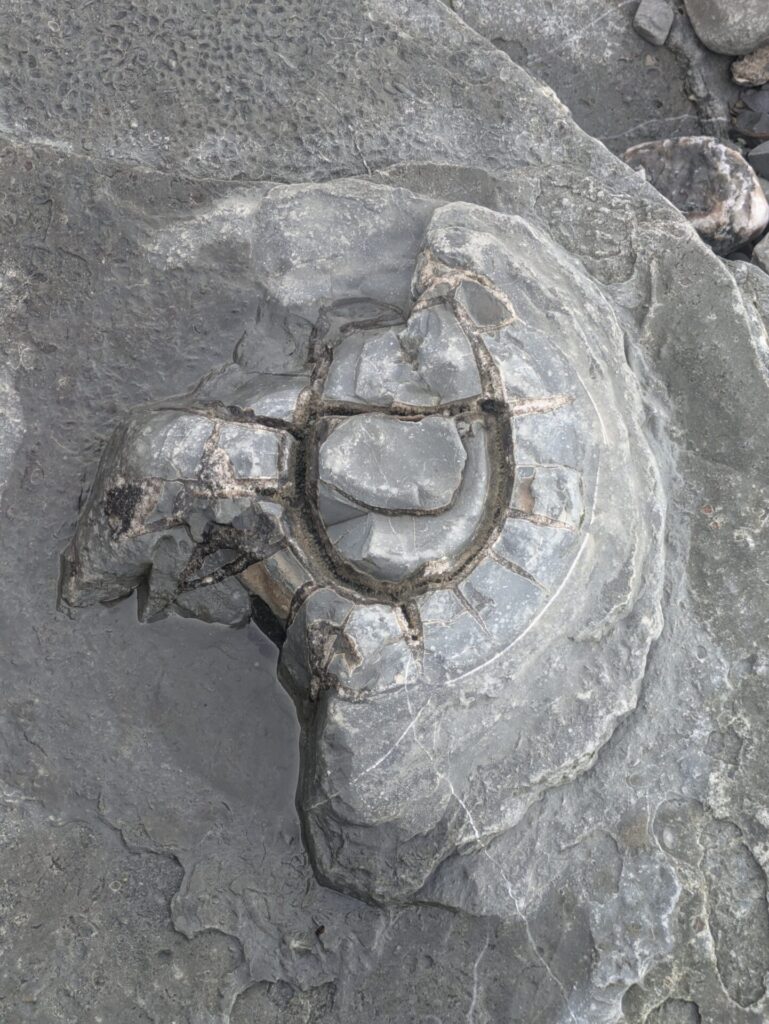
There were some very curious formations in the rocks which looked like fossils but on enquiry later turned out to be “Septarian nodules - sediment of different hardness forms around some kind of nucleus - then it contracts from middle outwards.”
While briefly rock pooling on the way back over the bedding planes we found beadlet anemone, coral seaweed, purple top shell.
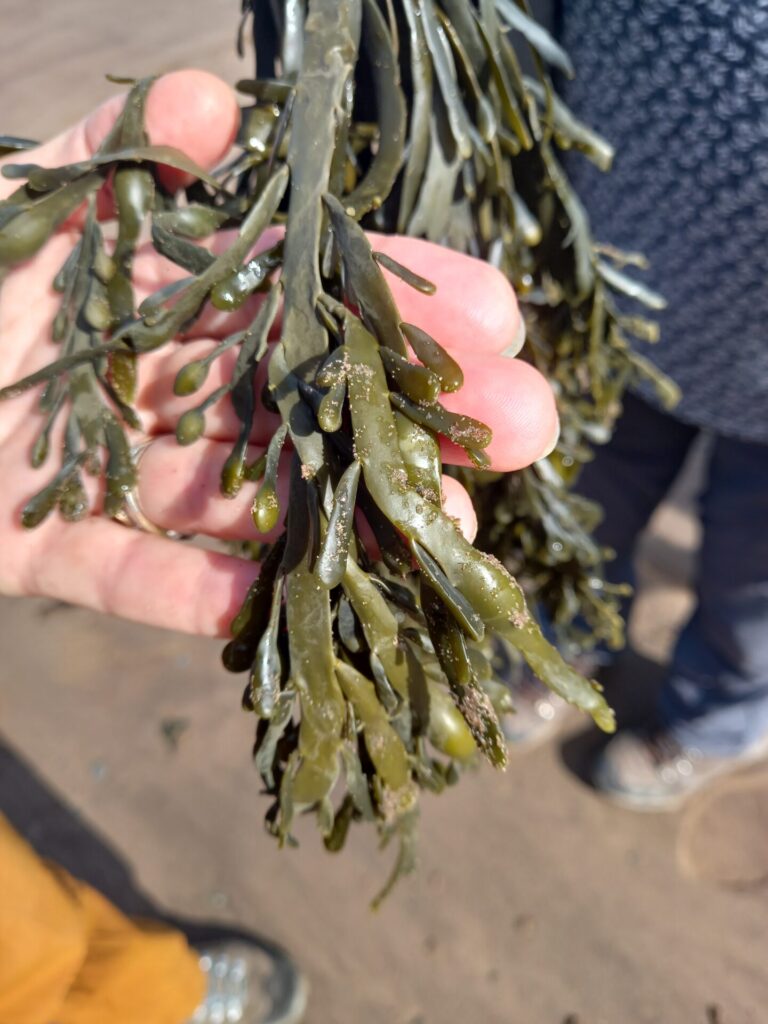
Returning to the slipway we had a look for various seaweeds. We had already found egg wrack washed up on the beach together with its epiphyte Wrack siphon attached, but we also found bladder, serrated (toothed), spiral and channel wrack the latter an upper shore species which curls to prevent dehydration plus laver, enteromorph/ gut weed, dulse and green sea lettuce.
Nicola Hunt