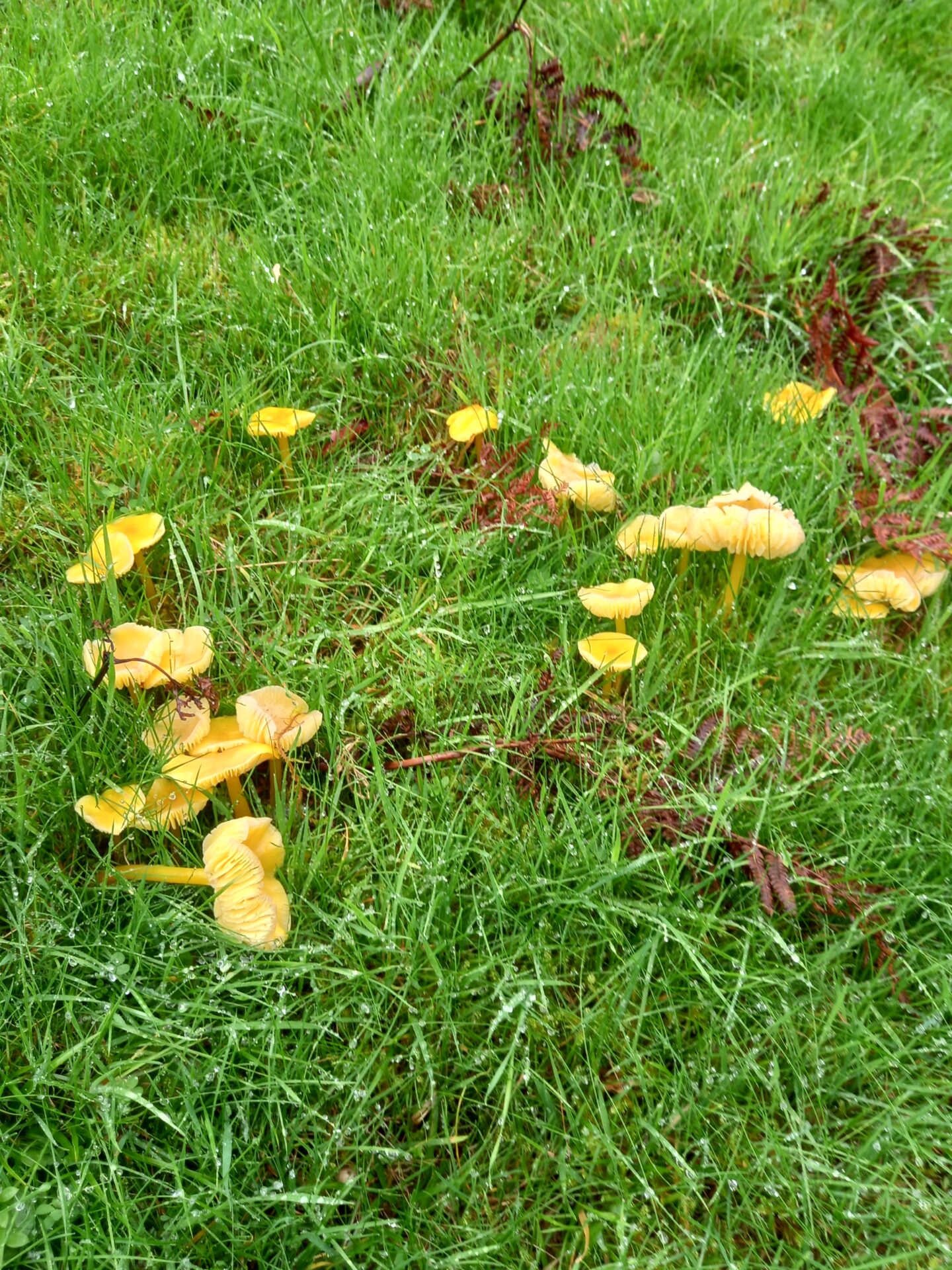
We all successfully managed to find our way to the farm which was the starting point for the fungi walk. We were met by Pete Baker and his brother-in-law who manages the farm. The land around this part of the farm is very steep so has had very little “improvement” such as ploughing or fertilisers over many decades. This has helped maintain the wide range of flora and fungi. Pete explained the waxcaps were later than usual this year but this week was coming up to a peak so good timing for our group.
At first we walked through a steep grassy pasture and soon started to spot waxcaps. These are specialist grassland fungi and there are many species in fantastic colours such as the yellow and green parrot waxcap, the bright orange/yellow golden waxcap and the vivid red crimson waxcap while the Glutinous waxcap as its name suggests felt oily and slimy. Other grassland fungi were found including small delicate toadstools growing on moss called “moss caps” and spindles which emerge like flames from the grass.
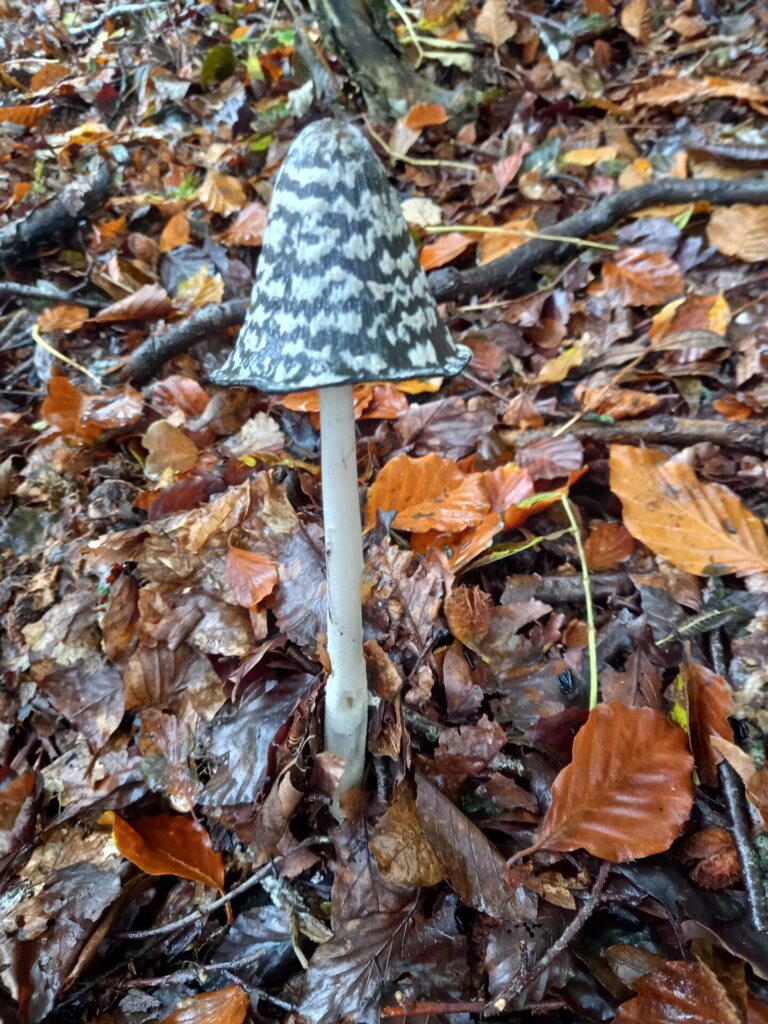
Next through a gate into deciduous woodland with plenty of species to be found on rotting tree trunks and branches. A clamber up some very steep slopes under beech trees yielded the splendid Magpie Inkcap and some huge bolete fungi, different to the grassland fungi as this group has pores rather than gills.
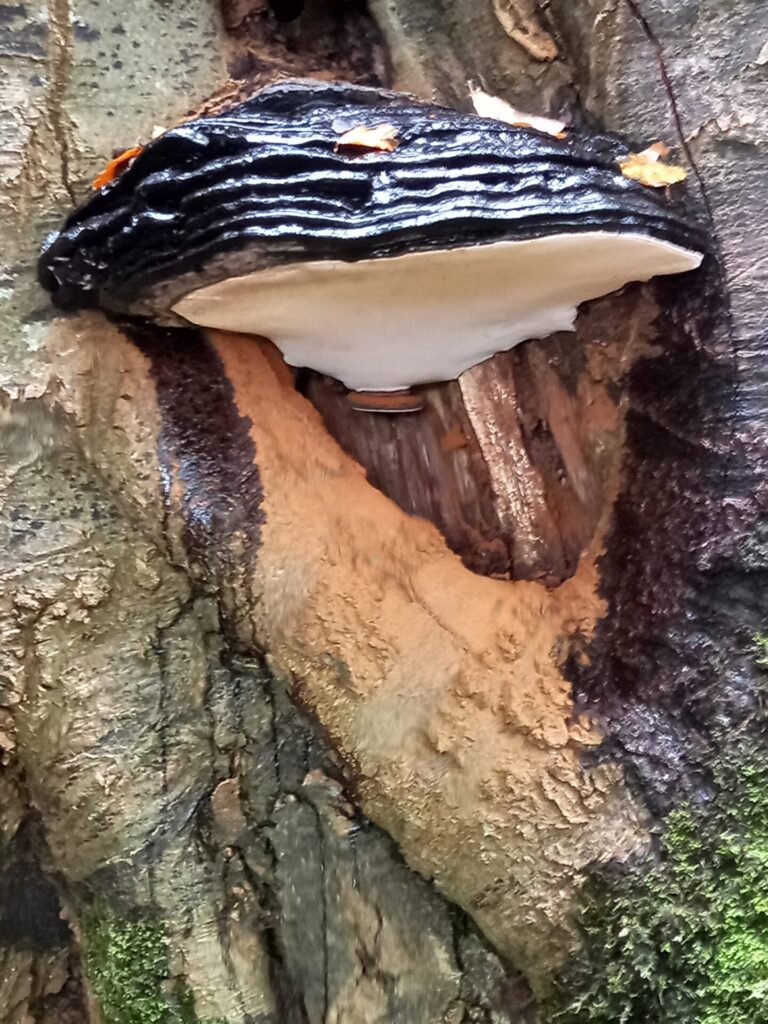
Striking bracket fungus- “Artists palette” was growing at different levels up tree trunks the white undersides contrasting with the dark chocolate brown tops, its spores scattered on the brackets below
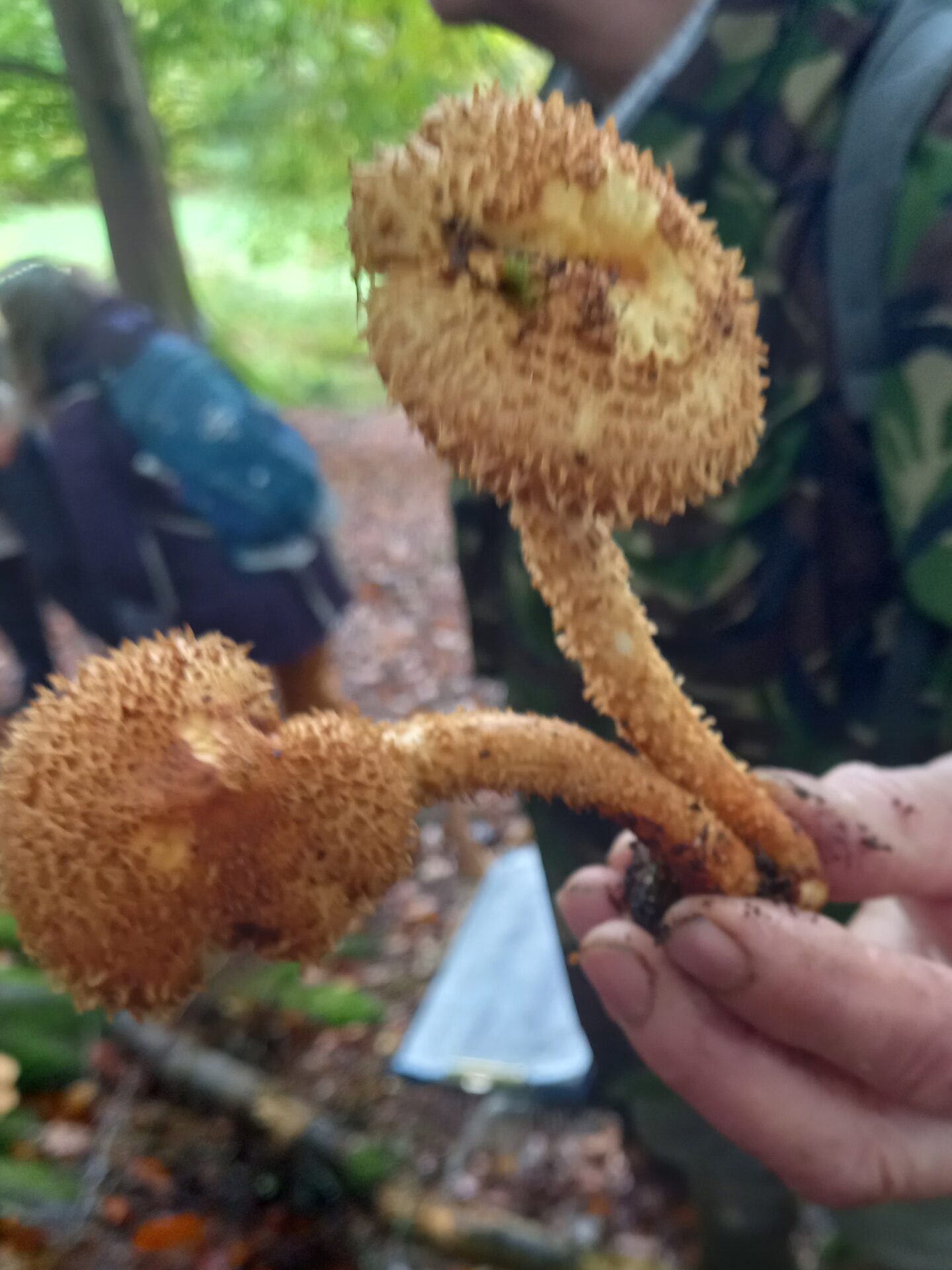
Shaggy Scalycap looks like it is wearing a teddy bears fur- the variety of forms is vast.
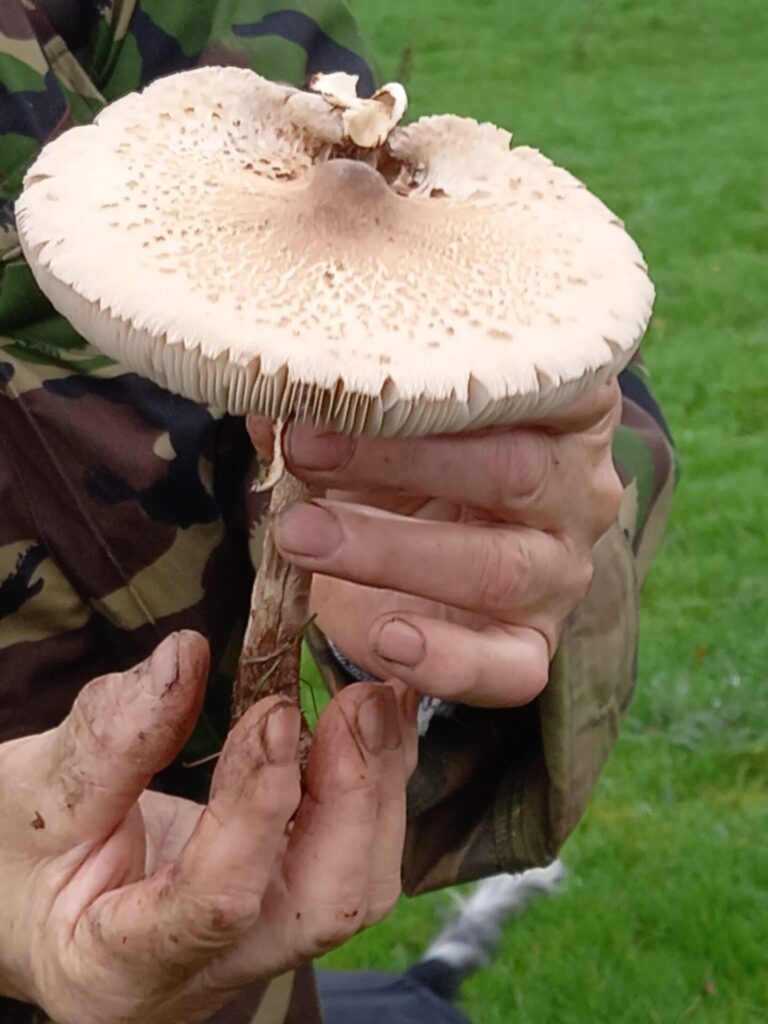
Time was catching up with us so we made our way back down to the farm via another steep slope finding an enormous Slender Parasol towards the bottom of the field.
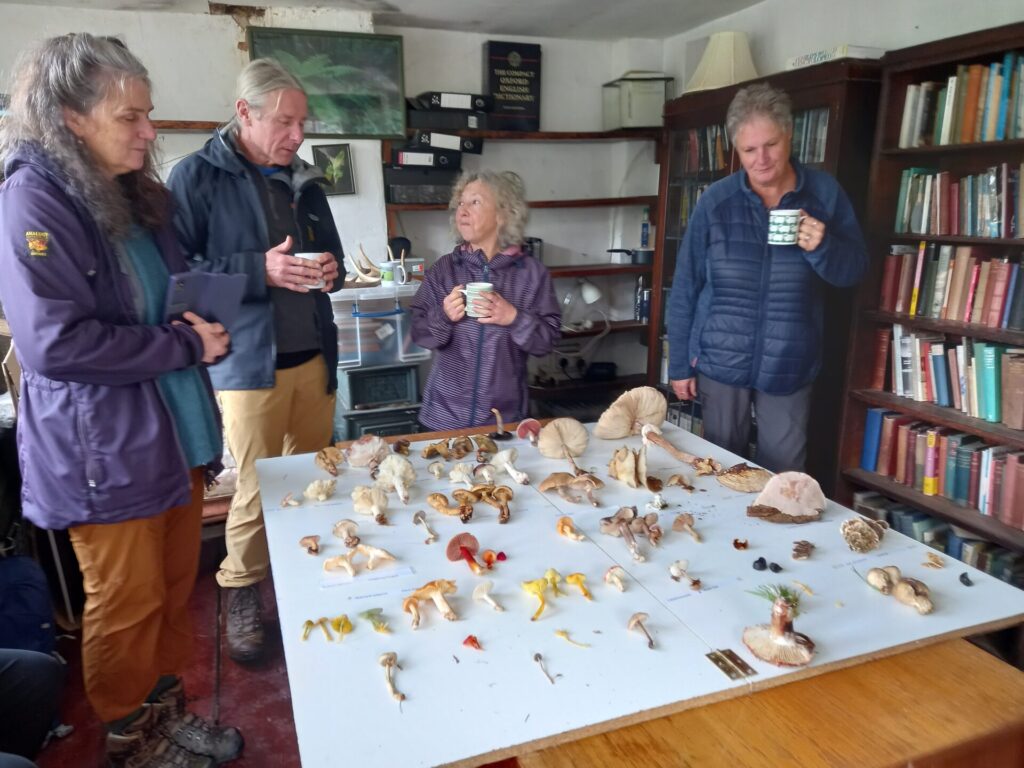
Throughout the walk Pete did a great job at explaining the role of fungi, how fungi develop and linking the characteristics of some of the fungi to their names. Getting back to the farmhouse Pete set out all our specimens on a white table together with labels creating a fantastic visual display to admire while enjoying homemade rock cakes and drinking a well deserved hot drink.
Below is a list of common names of fungi found on this foray. Thank you to Vanessa for providing this comprehensive list.
- Petticoat mottled gill.
- Glutinous waxcap. Yellow
- Parrot waxcap. Green underneath
- Orange moss cap. Tiny, parasitic on springy turf moss.
- Orange moss cap.
- Dung roundhead.
- Golden waxcap
- Parrot waxcap has tint of green
- Handsome club. Is a Spindle. Yellow wiggly.
- Bonnets - mycena. Dull bonnet
- Bracket fungi - turkey tail
- Honey fungus
- Ash die back - Burnt King Alfred cakes
- Clustered tough shank
- Shaggy bracket
- Crimson waxcap
- Magpie inkcap
- Lactarius - beech milk cap
- Boletus genus - lurid bolete
- Red cracking bolete
- Buttercup
- Slimy beech milkcap
- Porcelain mushroom
- Ochre brittle gill
- Purple brittle gill
- Shaggy scaly cap
- Tawny bolete
- Black blugar
- Verdigris russula
- Boletus satanus
- Blusher
- Beech sickener
- Dung roundhead turfed
- Turf mottlegill
- Lilac Pink gill
- Meadow waxcap
- White spindles
- Goblet waxcap
- Slender parasol
- Snowy waxcap
- Stump Puffball