After the heatwave cooler weather was welcome on our visit. We avoided the forecast rain
but the clouds remained so it was not a good day for insects on the wing. However, the
dunes are a remarkable and rare habitat. Sand dunes are formed when sand, dried out at
low tide get blown inland and form mounds which become anchored when grasses grow
on top of them. At Berrow the dunes reach a height of 15m and house a specialist
community of plants in a mosaic of short and longer grass, scrub and 8 small ponds.
One section of sand had been excavated in the past excavated and when stopped in the
late 1980's it was filled in with clay to stabilise the area thus creating a very different flora
of plants that flourish on richer soil.
The ponds are found in dips or slacks which are sheltered from the wind and there are
areas of long linear depressions of beach enclosed by newly formed dunes called swales.
The fixed dunes are dominated by grasses and the low growing herbaceous plants which
require nutrient poor substrate so they are not out competed by more robust plants.
Management is required to help maintain the open areas and prevent scrub taking over; in
the past this would have been kept under control by grazing.
Our guide took us around the Nature Reserve and between us we spotted some
interesting, some very rare and other typical plants of the dunes and scrub. We also found
a Cream Tiger Spot Moth which looked like it had just emerged as its wings were not yet
fully expanded. It is a fascinating habitat and well worth coming back to and explore the
flora and insects further.
List of notable flowering plants:
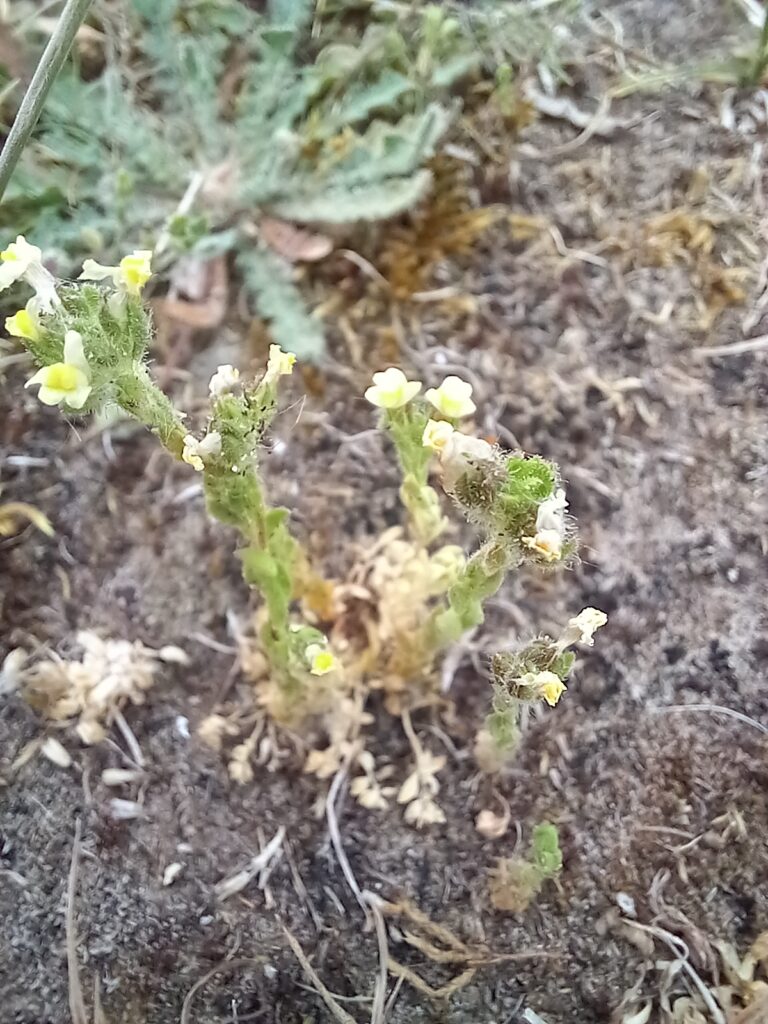
- Sand Toadflax
- Linaria arenaria (only found in 2 sites in UK ) see photo
- Sea Buckthorn- invasive so needs to be managed, originally plant of the East Coast
- Tall Melilot Melitus altissimus (member of Fabaceae family including clovers)
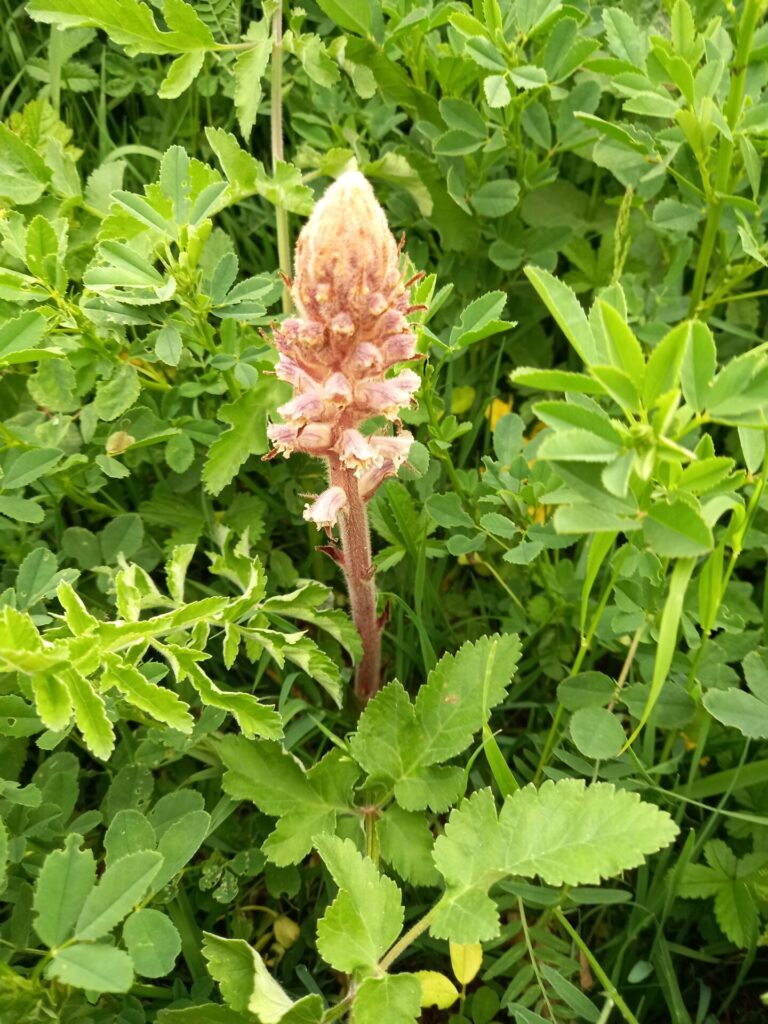
- Common Broomrape Orobanche minor , found amongst the Melilot , this plant is a root
- parasite and does not produce its own chlorophyll (see photo)
- Tufted Vetch Vicia cracca
- Agrimony—Agrimonia eupatoria
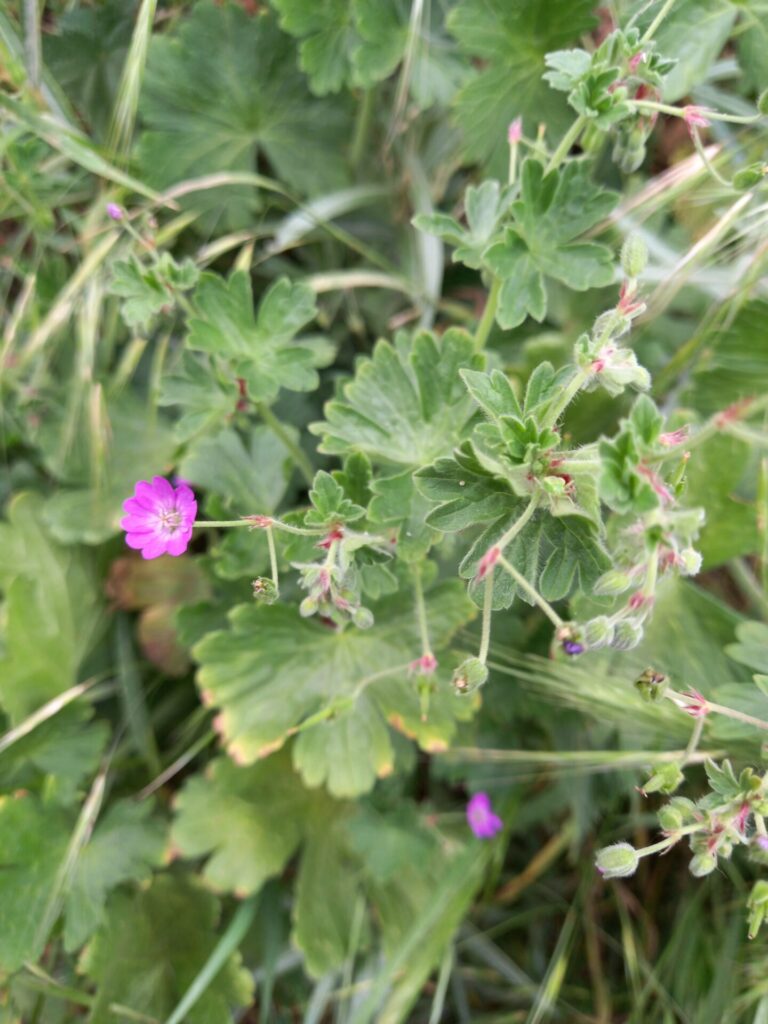
- Hedgerow Crane's-bill Geranium pyrenacium (see photo) a bright pink flower
- Soapwort Saponaria officionalis
- Charlock Sinapis arvensis
- Black Mustard Brassica nigra
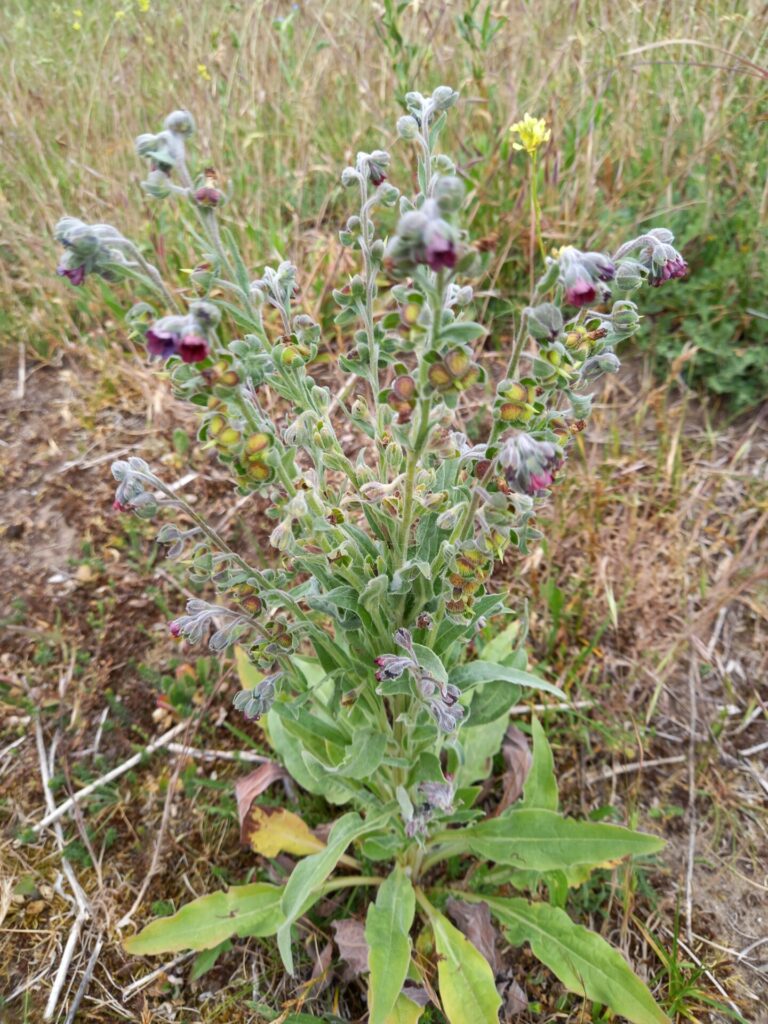
- Hound's-tongue Cynoglossum officinalis (see photo)
Insects
- Broad-bodied Chaser Dragonfly
- Cream Spot Tiger Moth
- Thick- legged flower Beetle